
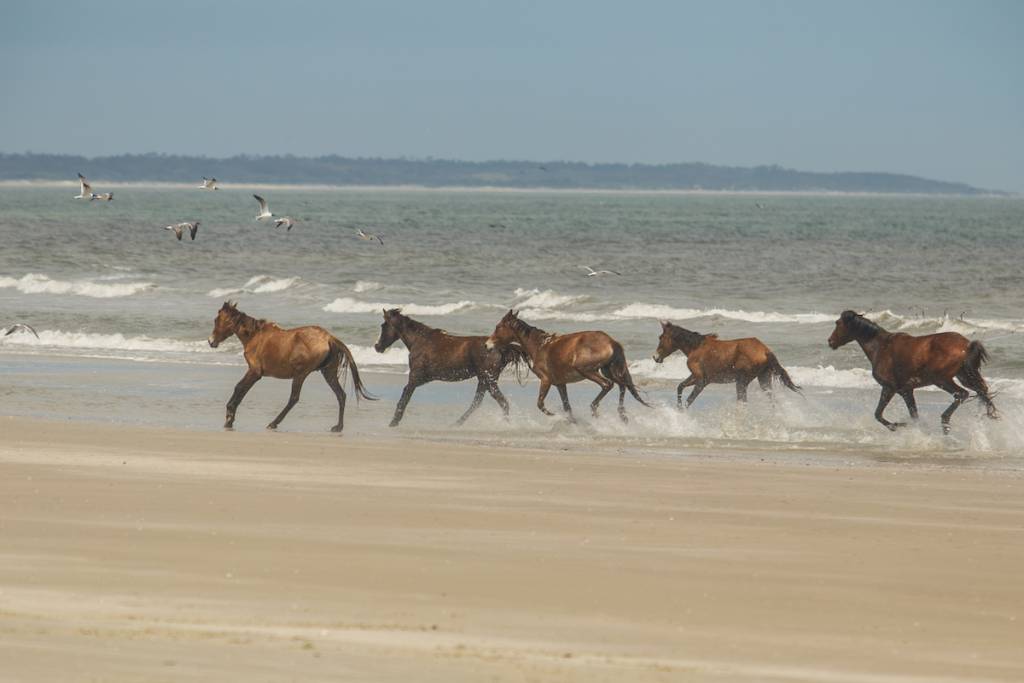

Seeing a horse on the beach, or standing in front of historic ruins instantly paints a romanic picture… but what if you didn’t have to travel across the world to see it? As it turns out, Georgia’s Cumberland Island is home to many wild, or feral, horses. Keep scrolling to learn more.
Cumberland Island’s Feral Horses
According to the National Parks Service, the earliest historic account of horses on Cumberland Island was in 1742, documented during a Spanish and English battle over Fort St. Andrews.
With a long history on the island, horses were already feral on the island by the time the park was established in 1972.
Why are we saying ‘feral’?
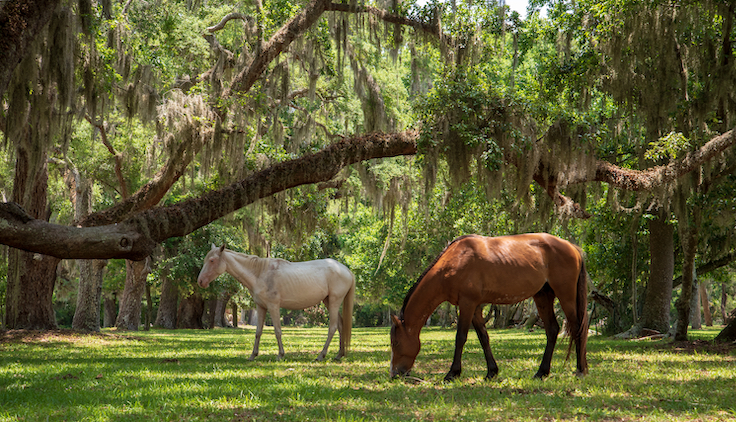
While some people use ‘wild’ and ‘feral’ interchangeably, the term ‘feral’ is more correct here because, according to the National Parks Service,
A feral animal is an animal that was once domesticated, but has reverted to a wild state and adjusted to surviving in a natural environment without help or support of any kind from humans.
The horses on Cumberland Island are non-native, and come directly from domesticated horses. Now, they live unmanaged (no food, water, veterinary care, or population control) on Cumberland Island.
How many feral horses live on Cumberland Island?
It’s hard to say exactly, but the National Parks Service has conducted population surveys since 2003 that have returned counts ranging from 120 to 148 horses a year.
They do note,
These numbers are not considered a total count of all horses present, but rather they are a measure of abundance. The total number of horses on the island could be 30 to 40 animals higher than the annual survey results.
The horses probably live around 9-10 years, with natural stressors shortening their lifespans compared to domestic horses, which live 25-30 years.
Can I visit the feral horses?
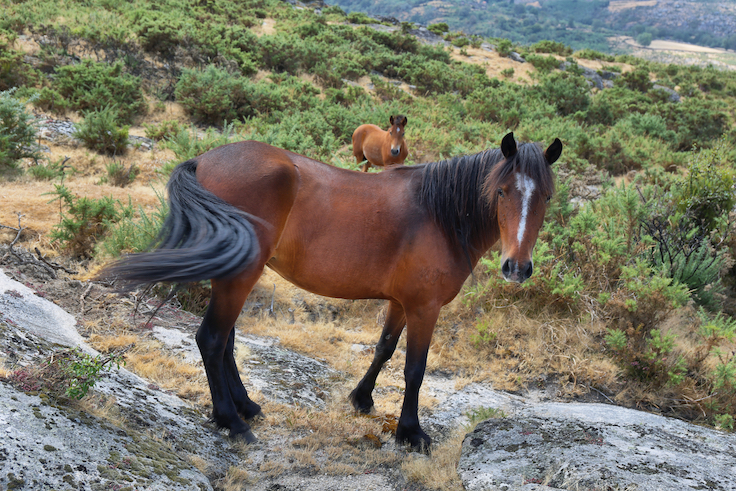
Yes! The feral horses of Cumberland Island are a huge tourist attraction. The only way to reach Cumberland Island is via ferry, and some local reports actually indicate that more ferry seats might soon be available to tourists.
However, visitors are NOT allowed to interact with the horses in any way. Never try to feed or pet the horses. The National Parks Service states,
Cumberland visitors have been injured by horses in the past, usually in the form of kicks, bites, and being knocked down. These are big, powerful animals. Give them a lot of respect and maintain a distance of at least 50 feet… Remember that horses have the right-of-way. If a horse approaches you, move out of its path and try to put a tree, picnic table, or other large object between you and it.
Want to learn more about the feral horses of Cumberland Island? Head to the National Parks Services’ website, here!