


If you love the full moon, then you’ll definitely want to take a look outside tomorrow, to see November’s full Beaver Moon, the first in a series of super moons that will illuminate the night sky! Keep scrolling for all the details!
When and where to look
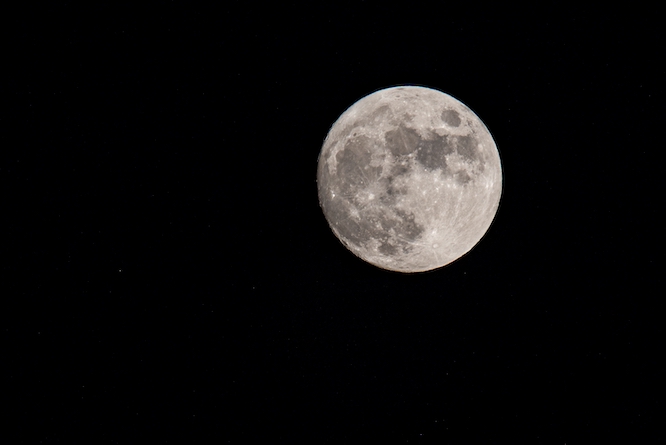
If you’re looking for a perfect view of the moon, first of all, you’ll need an unobstructed view of the sky, of course!
Recommended Articles
 4 new laws going into effect in Georgia beginning January 1st, 2027 that you should definitely know about
 The viral melted ‘stinky cheese sandwich’ is back at the Atlanta Christkindl Market—12th century Swiss tradition right here in the ATL
The Beaver Moon is expected to peak, at its fullest, on November 24th at 9:53 A.M. EST.
But… that’s not the best time to see it.
Obviously, as this is during the day, you’ll also be able to see a pretty good view of the moon all lit up the evening of the 23rd and 24th.
Why is it called the Beaver Supermoon?

There are lots of reasons that the Beaver Moon might be called that. One theory, according to the Farmers’ Almanac is:
America’s largest rodent knows that late autumn is the time to build a home. Beavers get busy this time of year finalizing their lodges, which is one possible explanation as to how the November full Moon became known as the Beaver Moon.
There are also some other names for the Beaver Moon, like:
- The Panther Moon
- The Deer Rutting Moon
- The Fledgling Hawk Moon
- The Turkey Moon
- The Frost Moon
Most of these names, including the Beaver Moon, come from different indigenous groups around the country.
And why is it a supermoon?

In super basic terms, a superman means the moon will appear larger in the sky.
NASA explains,
A ‘Supermoon’ occurs when a full Moon coincides with the Moon’s closest approach to Earth in its elliptical orbit, a point known as perigee. During every 27-day orbit around Earth, the Moon reaches both its perigee, about 226,000 miles (363,300 km) from Earth, and its farthest point, or apogee, about 251,000 miles (405,500 km) from Earth… ‘Supermoon’ isn’t an official astronomical term, but typically it’s used to describe a full Moon that comes within at least 90 percent of perigee.
The November Beaver Moon is the first supermoon in a series of three, with December and January also boasting supermoons!
Look to the sky, Atlanta! It’s time for the full moon!