
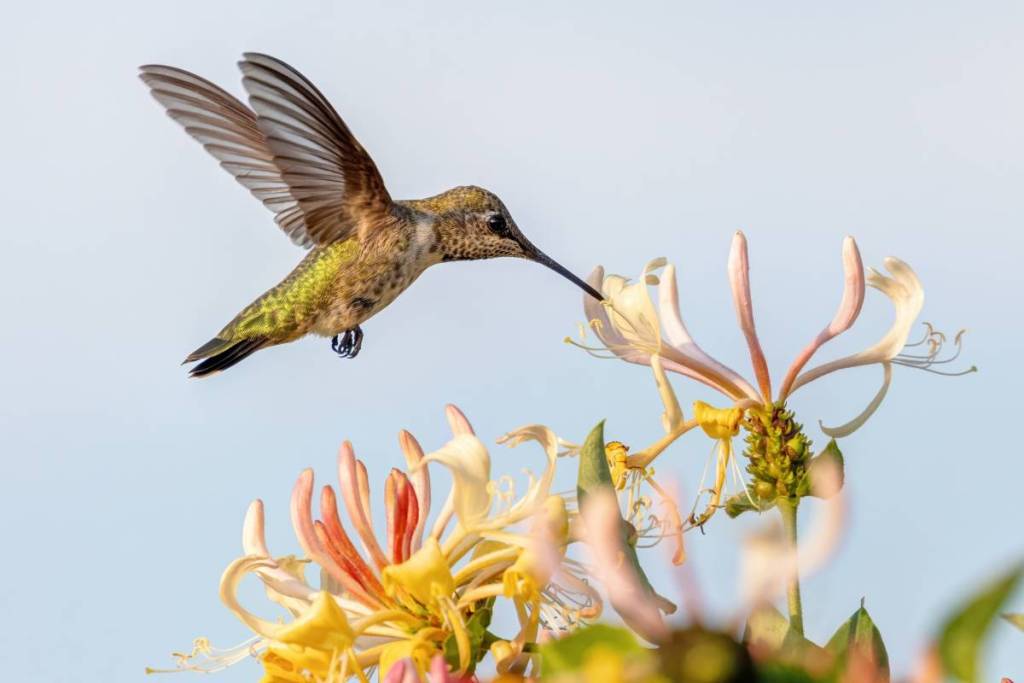

Hummingbird season is upon us, Atlanta! And you can actually help them along on their journey… all while getting to watch these adorable birds flit and fly through your yard! Keep scrolling to learn when to expect hummingbirds, how to feed them, and what to plant to keep ’em around.
When is hummingbird migration season in Georgia?
Hummingbird migration season typically begins in Georgia in late August and continues through Mid October.
What kinds of hummingbirds migrate through Georgia?
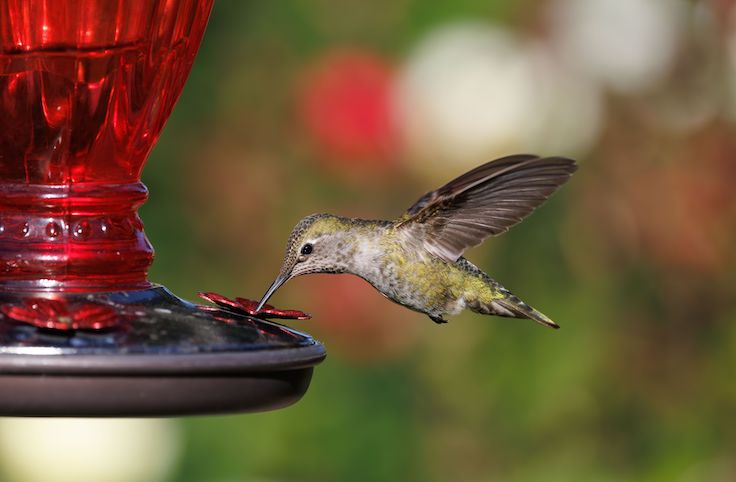
According to the Georgia Department of Natural Resources, Georgia is home to 11 hummingbird species during the year:
- the ruby-throated hummingbird
- black-chinned hummingbird
- rufous hummingbird
- calliope hummingbird
- magnificent hummingbird
- Allen’s hummingbird
- Anna’s hummingbird
- broad-billed hummingbird
- green violet-ear hummingbird
- green-breasted mango hummingbird
- broad-tailed hummingbird
Fun Fact: the calliope hummingbird is the smallest bird in North America.
The ruby-throated hummingbird is the most popular local hummingbird, especially since it’s the only species known to actually nest in Georgia.
How do I attract hummingbirds to my yard?
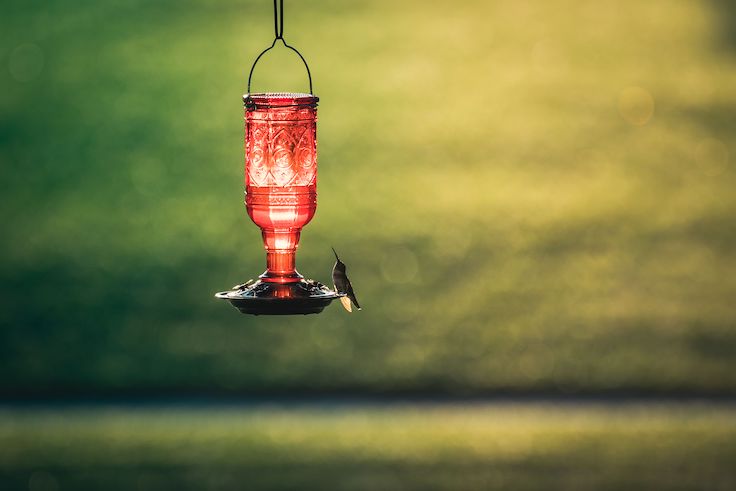
Hummingbird feeders
To attract hummingbirds to your yard, you’ll need a hummingbird feeder. You can get these at any yard store, Walmart, or of course, from local artists!
Then, make their nectar. The best hummingbird nectar consists of 1 part sugar to 4 parts water (to mirror the sugar concentration in flower nectar).
To make the solution, boil the water for 2–3 minutes, and then add in the 1 part sugar. Cool and store the mixture in a refrigerator until you are ready to use it.
Georgia Department of Natural Resources also notes:
There is no need to add red food coloring. Hummingbirds are attracted to the red color of the feeder and do not prefer red nectar to clear.
Plants that attract hummingbirds
Of course, another way to attract hummingbirds to your yard is by planting their food plants, which includes:
- Zinnia
- Cockscomb
- Beebalm
- Mexican Sunflower
- Coral-Bells
- Snapdragon
- Geranium
- Petunia
- Hibiscus
- Azaleas
- Red Horse Chesnut trees
And SO many more! See the full list on Georgia’s Department of Natural Resources’ website, here.
Don’t miss out on all these beautiful birds!