
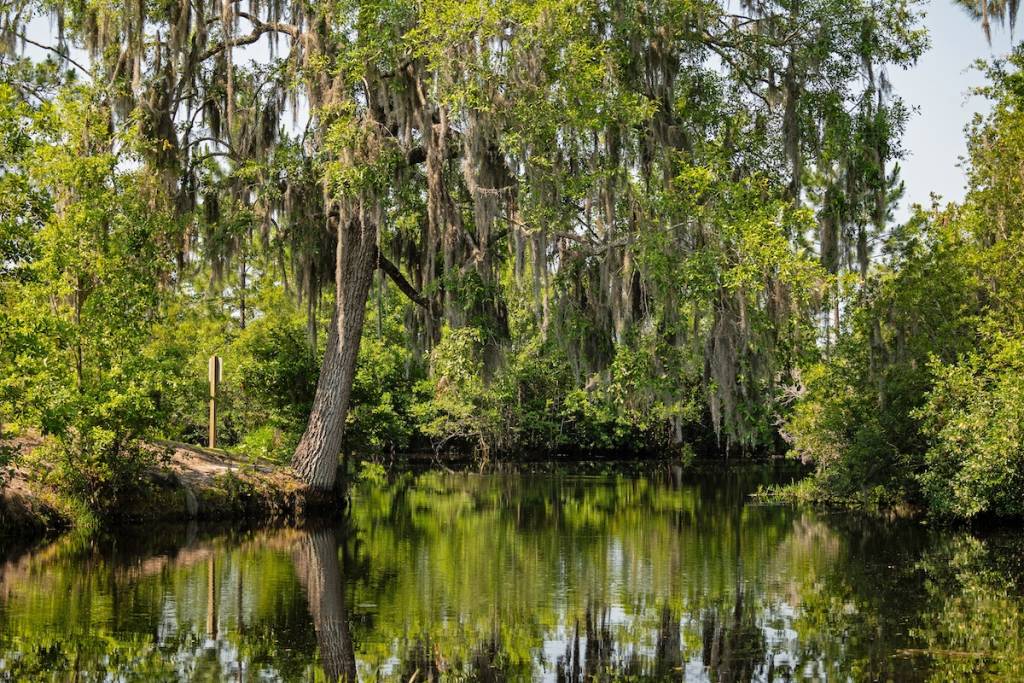

Since 1982, the Okefenokee National Wildlife Refuge has been on the World Heritage Site organization’s radar… and now it might finally happen.
The awe-inspiring Okefenokee, which has a deep cultural heritage with local indigenous tribes, is a stunning and vast wilderness, and a powerful reminder of the resilience of nature, is a truly one-of-a-kind natural phenomenon. And we’re so lucky it’s right here in Georgia.
Harriet Beecher Stowe said of the swamp,
This swamp … occasions a never-ceasing conflict of spirit. It is a glorious, bewildering impropriety. The trees and shrubs in it grow as if they were possessed; and there is scarcely a month in the year that it does not flame forth in some new blossom. It is a perpetual flower-garden, where creepers run and tangle; where Nature has raptures and frenzies of growth, and conducts herself like a crazy, drunken, but beautiful bacchante.
What is a World Heritage Site?
The UNESCO World Heritage Convention is an international organization that works to respect and protect natural or man-made site that provide “outstanding universal value.”
As of 2025, a total of 1,248 World Heritage Sites (952 cultural, 231 natural, and 40 mixed (cultural & natural) properties) exist across 170 countries.
There are currently 26 World Heritage Sites in the United States, many of which are National Parks.
The Okefenokee Swamp’s World Heritage Bid
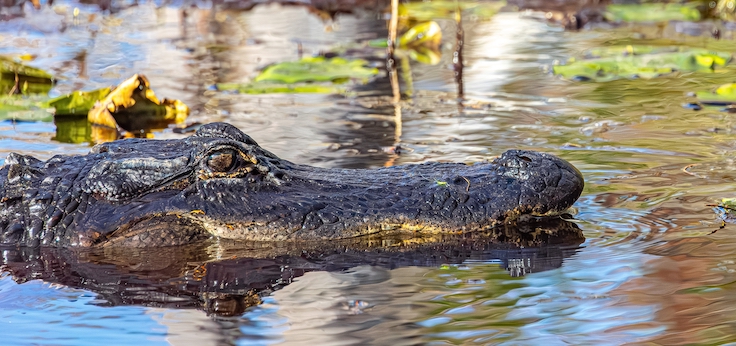
Because of its profound cultural and natural importance to both locals and the world, the Okefeneokee Swamp has a bid to be considered for recognition as a World Heritage Site.
The bid states,
The Okefenokee is a showcase mosaic of ecosystems, including temperate grasslands, forests, savannas, shrublands, and one of the only subtropical peatlands in the world. Despite intermittent attempts by humans to ‘tame’ the Okefenokee over the centuries, the Okefenokee demonstrates that nature persists. Yet the rich cultural history of the Okefenokee is well documented – as the location of early Seminole settlements and burial mounds; as a refuge for enslaved people in the 18th and 19th century; as a location for timber and the making of fortunes; and as the birthplace of the “Swamper” and “Cracker” cultures – including that music, cuisine and dialects. Additionally the first inhabitants of the Okefenokee were from the Muskogee (Creek) Nation, who named it the “land of trembling earth” in the Muskogee language.
The Okefenokee Swamp was officially designated as a National Wildlife Refuge in 1937. It was then designated as a National Wilderness Area in 1974, among many other accolades.
Since then, The Okefenokee National Wildlife Refuge was originally identified as a potential World Heritage Site in 1982.
You can learn all about the Okefenokee’s bid on their website, here.
So what happens next?
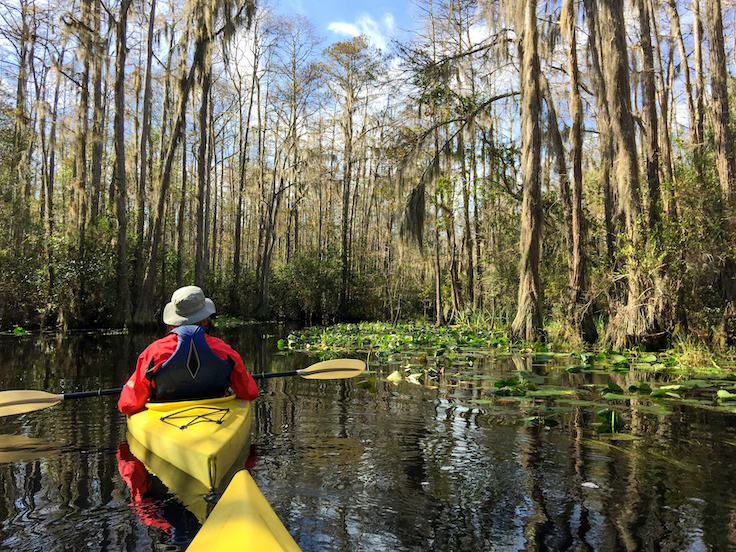
Now, we wait until July.
According to a report by the Atlanta Journal-Constitution,
… The refuge’s bid is now set to be considered by the World Heritage Committee at its convention this July in Busan, South Korea. There, the committee’s 21 members will take a final vote to decide whether the Okefenokee National Wildlife Refuge belongs on the prestigious list.
Local reports also state that currently, the Okefenokee has a very ‘favorable’ preliminary report, which is a great step in the right direction!
We’re rooting for you, Okefenokee! (No roots puns intended!)