
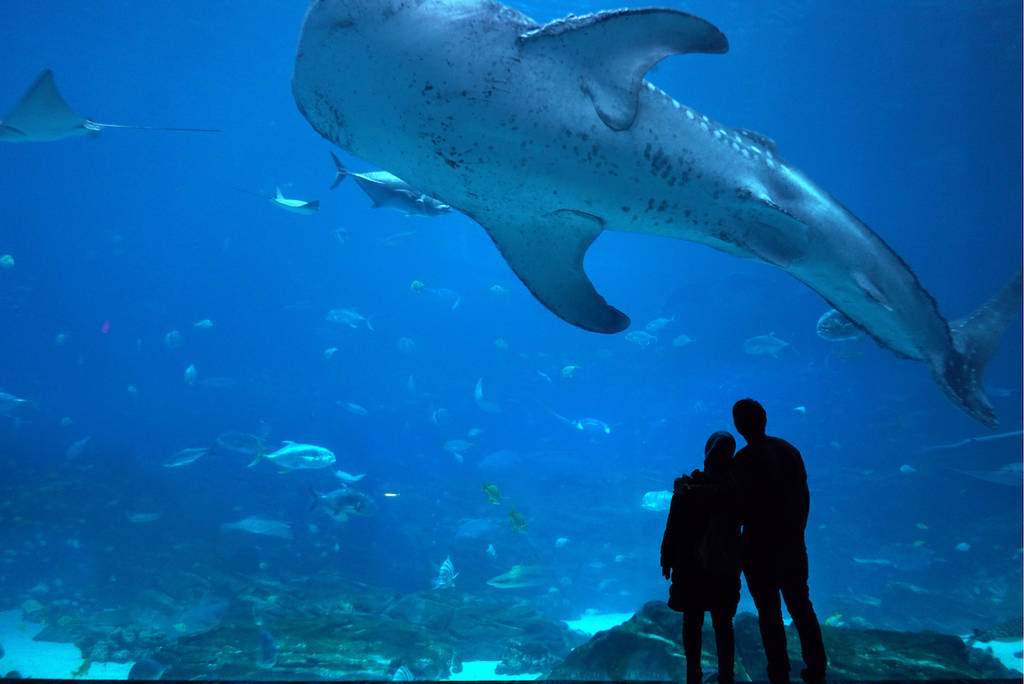

We know for a fact it’s big, but if you want to know how big, let this number sink in: the Ocean Voyager, the single habitat you walk under at the Georgia Aquarium, holds 6.3 million gallons of saltwater. The Shedd Aquarium in Chicago holds about five million gallons in total, across the whole building. One tank in downtown Atlanta has more water in it than an entire world-famous aquarium.
Add up all nine galleries on Baker Street, and you get more than 11 million gallons, which is what makes this the biggest aquarium in the United States and the largest in the Western Hemisphere. It held the Guinness World Record for largest aquarium on the planet from 2005 until 2012, and it’s still routinely ranked among the best aquariums in the country.
No other U.S. aquarium comes close
The runner-up depends on what you consider an aquarium. The Seas with Nemo and Friends at Epcot is a 5.7-million-gallon saltwater tank, making it the largest single body of water in any American attraction that isn’t this one. Shedd, the biggest conventional city aquarium after Atlanta, comes in around five million.
Either way, Georgia Aquarium at 11 million holds roughly double the next name on the list, and Ocean Voyager on its own would still outrank both of them. It has been that way since the doors opened in November 2005, after 27 months of construction, when it was the largest aquarium anywhere in the world. It kept that title until 2012, when Singapore built a bigger one.
Since then, aquariums in China and the UAE have gone bigger too: Chimelong Ocean Kingdom and the newer Chimelong Spaceship in Hengqin, plus SeaWorld Abu Dhabi. Spain’s L’Oceanogràfic in Valencia, Europe’s largest aquarium, comes close but still holds slightly less water than Georgia Aquarium. None of the bigger ones are in this hemisphere.
The exhibit that makes the record feel real
22 October 2026 09:00 + more dates
Georgia Aquarium
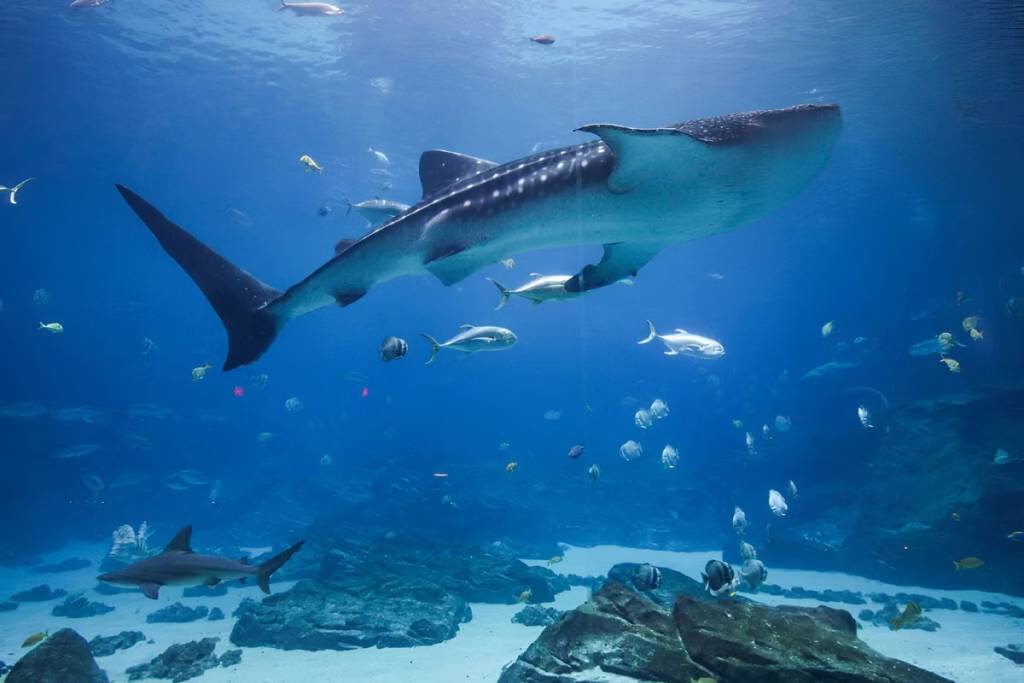
Scale is more than a statistic: it allows Georgia Aquarium to house animals few other facilities can, including the only whale sharks in a U.S. aquarium and one of only a handful of aquariums worldwide with them. Ocean Voyager stretches 284 feet long, 126 feet wide and up to 30 feet deep, with a 100-foot acrylic tunnel, a 61-foot-wide main window and 185 tons of acrylic. The window alone has 4,574 square feet of viewing glass.
Next door, SHARKS! Predators of the Deep holds another 1.2 million gallons across a 185-foot-long, 20-foot-deep habitat. Across all nine galleries, visitors can see more than 500 species, including beluga whales and sea otters in Cold Water Quest, bottlenose dolphins in Dolphin Coast, California sea lions in Truist Sea Lion Studios and alligators in Aquanaut Adventure. The regular tickets to Georgia Aquarium cover all nine galleries.
How Atlanta keeps 11 million gallons alive

The part that never makes the brochure is the plumbing. Eleven million gallons of artificial seawater does not get poured in once and left alone; it runs through mechanical filtration, protein skimming and ozone treatment around the clock, and about 98% of the water in the building is recirculated rather than replaced.
That system is the reason a landlocked city 250 miles from the coast can run the largest aquarium in the hemisphere at all. There is an ocean’s worth of water moving around a block of downtown Atlanta, continuously, and almost none of it ever leaves the building.