


Another State of Emergency has been declared in Georgia, this one lasting from today, January 30th, 2026 at 12pm until February 6th. This State of Emergency comes right off of the heels of last weekend’s Arctic blast, giving Georgia no break from the winter weather. Keep scrolling to learn more about what’s going on.
Why is Georgia in a State of Emergency?
Governor Kemp said in a statement,
While Mother Nature may not be giving us a break with these back-to-back storms, the good news is we don’t take any days off when it comes to keeping Georgia communities prepared and safe. Along with our state partners, we have been monitoring this new winter storm well ahead of its arrival and preparing for whatever it may bring. While the weather event will mostly impact north and east Georgia, extending all the way to the coast, I’ve declared a statewide State of Emergency so we can more easily move resources to the areas expecting impact and stage those assets ahead of the storm.
What is the weather forecast situation?
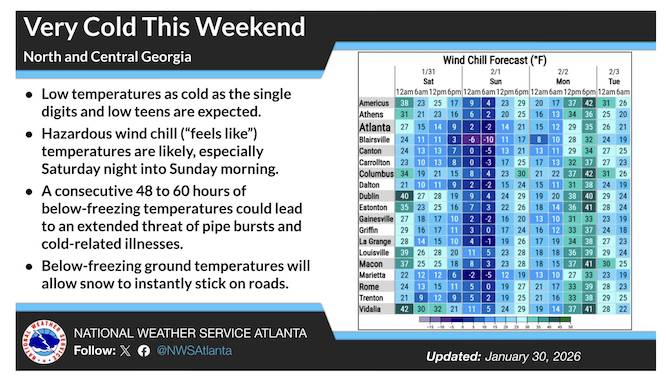
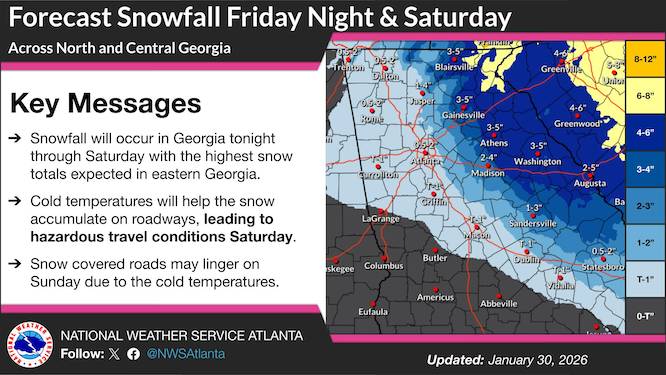
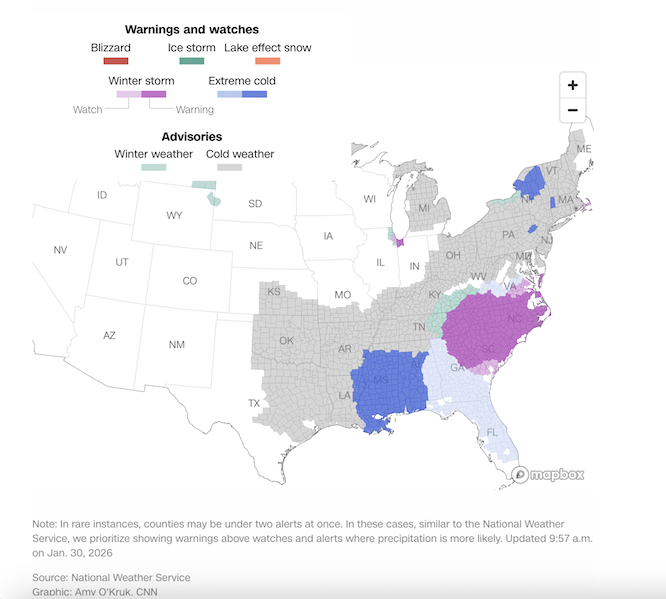
Right now, Georgia is bracing for a snow storm brought by a ‘bomb cyclone’ headed towards the Southeast.
The current prediction shows we could get anywhere from 0.5-2 inches of snow. You can learn more about the weather predictions here.
How can I stay safe?
The first step to staying safe is staying informed. Tune in to your local weather forecasts and GEMA to get the most up-to-date weather predictions. You can also check out our winter readiness checklist here.
GEMA/HS Director Josh Lamb says,
As this winter weather moves into Georgia, we encourage residents to stay home if possible before and during the storm. Fewer vehicles on the roads give GDOT crews the space they need to treat roadways safely and efficiently, helping keep everyone safer this weekend.
The Georgia Department of Transportation (Georgia DOT) is well prepared for this winter weather event and has already begun treating roads in areas within the storm’s path. Georgia DOT crews are pre-treating more than 20,000 lane miles on interstates and state routes with brine, prioritizing regions and routes that will experience the heaviest precipitation. Crews will brine continuously in 12-hour shifts before transitioning to plowing operations once snow begins to fall.
Stay safe and warm, Atlanta. And stay off the roads!